
We all have those days. Your to-do list keeps growing, your mind won’t slow down, and even small tasks feel harder than they should. Everything feels like too much and no matter what you try, the stress just doesn’t go away.
I know this feeling well. A couple of years ago, I was running on empty. I was exhausted, anxious, and constantly overwhelmed. That’s when I started researching and testing different techniques of stress management that actually fit into a real, busy life, not just a wellness influencer’s perfectly curated morning.
What I found changed everything. And in this post, I’m sharing the 10 best methods that genuinely worked for me and for thousands of people who struggle with everyday stress.
These are not vague tips. These are specific stress release activities you can start today, even if you only have 10 minutes. No expensive programs, no perfect routine, no equipment needed.
Let’s get into it.
Table of Contents
Why Does Stress Feel So Hard to Control?
When you’re stressed, your body releases cortisol, your main stress hormone. Small amounts are fine. But when stress sticks around too long, cortisol stays high and things start to go wrong, poor sleep, low energy, trouble focusing, and constant anxiety.
According to the American Psychological Association, long-term stress affects both your physical and mental health. Harvard Health links chronic stress to a weakened immune system and weight gain.
That’s why learning the right techniques of stress management matters, not just for today, but for your long-term health.
Your body wants to calm down. Let’s help it do that.
1. Try Box Breathing — A Quick Way to Calm Your Mind
If you need fast stress relief, start here.
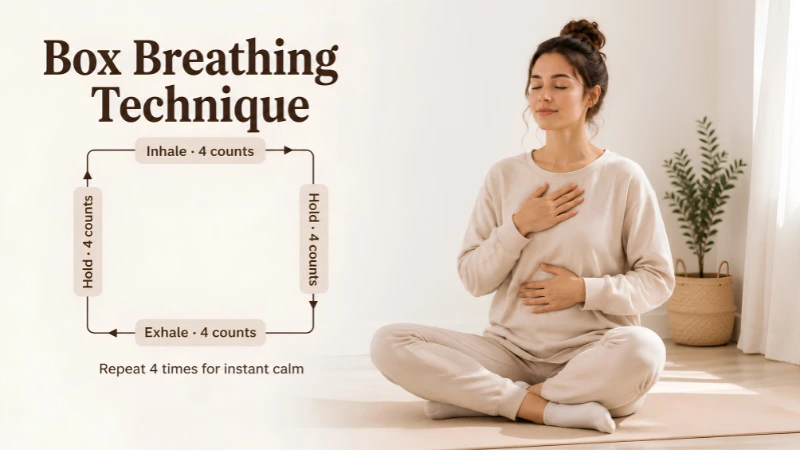
Box breathing is one of the most effective breathing techniques for stress reduction and it takes exactly 4 minutes. It works by slowing your heart rate and activating your parasympathetic nervous system, the part of your body responsible for rest and calm.
Here’s how it works:
- Inhale for 4 counts
- Hold for 4 counts
- Exhale for 4 counts
- Hold for 4 counts
Repeat this cycle four times.
That’s it.
This technique is often used in high-pressure situations and can help you feel calmer during a busy day or before bed.
Many people notice a difference after just a few rounds of slow breathing.
2. Move Your Body — Even for 10 Minutes
Exercise is one of the simplest and most effective ways to reduce stress.
When you move your body, your brain releases chemicals called endorphins. These chemicals help improve your mood and can make you feel calmer and more positive.
The good news is that you don’t need an intense workout.
A short walk, a beginner yoga session, stretching in your living room, or even dancing to your favorite song can help. What matters most is that you’re moving.
Research from the Mayo Clinic confirms that regular physical activity is one of the most effective stress relief exercises for long-term mental health. The key is consistency, not intensity.
3. Write Your Thoughts Down
Sometimes stress feels bigger because everything stays inside your head. Writing your thoughts down is one of the simplest activities that help relieve stress that costs absolutely nothing. When you get your thoughts out of your head and onto paper, they suddenly feel smaller and more manageable.
Set a timer for 5 minutes and write whatever comes to mind without worrying about grammar or structure. Just let your thoughts flow. Journaling can help you understand your feelings, spot stress patterns, and feel more in control. Best of all, it costs nothing and only takes a few minutes each day.
4. Try Progressive Muscle Relaxation
This is one of the most effective relaxation techniques for stress management that most people have never tried.
Here’s how: starting from your feet, tense each muscle group tightly for 5 seconds, then release completely. Move slowly up your body, calves, thighs, stomach, hands, shoulders, face.
By the time you reach the top, your whole body feels noticeably softer and calmer. This technique is especially helpful if you carry stress in your shoulders, jaw, or neck.
5. Limit Your News and Social Media Time
This one is simple but very real. Constant scrolling keeps your nervous system in a low-level state of alert. It’s one of the biggest hidden sources of modern stress.
Try a “no phone” rule for the first 30 minutes after waking up and the last 30 minutes before bed. You’ll notice a difference in your mood within just a few days.
6. Spend Time in Nature

One of the most natural stress reduction methods is simply going outside. Even 20 minutes in a park, garden, or any green space lowers cortisol levels measurably.
Can’t go outside? Even looking at nature photos or keeping plants in your room has a mild calming effect. But if you can get outside, do it. Your nervous system will thank you.
You don’t need to spend hours outside to notice a difference. Even 15 to 20 minutes can help.
7. Use the 5-4-3-2-1 Grounding Technique
This is one of the best stress management and relaxation techniques for moments when anxiety suddenly spikes and your thoughts start racing.
Here’s how it works:
- Name 5 things you can see
- Name 4 things you can touch
- Name 3 things you can hear
- Name 2 things you can smell
- Name 1 thing you can taste
This simple exercise helps shift your attention away from racing thoughts and back to what’s happening around you right now.
You can use this technique almost anywhere when stress starts to feel overwhelming.
8. Build a Calm Evening Routine
One of the most overlooked techniques of stress management is what you do at the end of your day.
A simple evening routine tells your brain that it’s time to slow down and prepare for rest.
The routine doesn’t need to be complicated.
You could:
- Drink a warm cup of herbal tea
- Spend a few minutes journaling
- Follow a simple skincare routine
- Stretch gently
- Read a few pages of a book
Focus on consistency, not perfection.
A calm evening can help you sleep better and feel more prepared for the next day.
9. Talk to Someone You Trust
This sounds obvious but it’s often the thing we skip most. Talking about what’s stressing you, to a friend, a family member, or even a therapist, is one of the most effective stress relief techniques for emotional wellbeing.
You don’t even need solutions. Sometimes just saying things out loud to someone who listens is enough to make the weight feel lighter.
If talking feels hard, try voice-noting yourself. It sounds strange, but it works the same way, it externalises the thoughts that are crowding your mind.
10. Create a Simple Morning Routine
How you start your morning sets the tone for your entire day. A chaotic morning creates a stressed day. A calm morning creates a calm day, it really is that straightforward.
Your morning routine doesn’t need to be a 2-hour wellness ritual. Even 15 minutes of intentional time, no phone, a glass of water, a few minutes of quiet, is one of the simplest techniques of stress management you can build.
Over time, this becomes your anchor. No matter how stressful the day gets, you started it on your own terms.
How to Know Which Technique Is Right for You
Everyone responds to stress differently. Some people prefer exercise, while others find journaling or breathing exercises more helpful. Start with one technique and try it for a week. If it helps, keep going. If not, try another method. The best stress relief methods are the ones you will actually use consistently, not the ones that look impressive on paper.
Frequently Asked Questions
-
What is the fastest way to reduce stress?
Box breathing can calm your mind within minutes. The 5-4-3-2-1 grounding technique is another quick method that helps you focus on the present moment.
-
Can I reduce stress naturally?
Yes. If you want to know how to reduce stress and anxiety naturally, start with these: exercise, deep breathing, journaling, spending time outdoors, and reducing screen time. These are simple, proven methods that improve your wellbeing without medication.
-
How long does it take for stress-management techniques to work?
Some methods, like breathing exercises, work within minutes. Others, such as exercise and healthy routines, may take a few weeks of regular practice.
-
What are some good stress-relief activities for busy people?
Short walks, journaling, stretching, deep breathing, and grounding exercises are simple stress-relief activities that take only a few minutes each day.
-
Do different people respond to stress differently?
Yes. Everyone experiences stress differently. The best approach is to try several techniques and find the ones that work best for you.
Final Thoughts
Stress is a part of life, but feeling constantly overwhelmed does not have to be.
The 10 techniques of stress management in this post are simple, free, and proven to work for real people with real, busy lives. You do not need to do all 10 at once. You do not need a perfect schedule or a lot of time. You just need to start with one thing, today.
Your calm is not a luxury. It is something you deserve every single day.
If this post helped you, save it for later or share it with someone who needs it. And drop a comment below, which technique are you going to try first?


1 Comment
Pingback: Self Care Routine for Women: 7 Easy Daily Self Care Tips